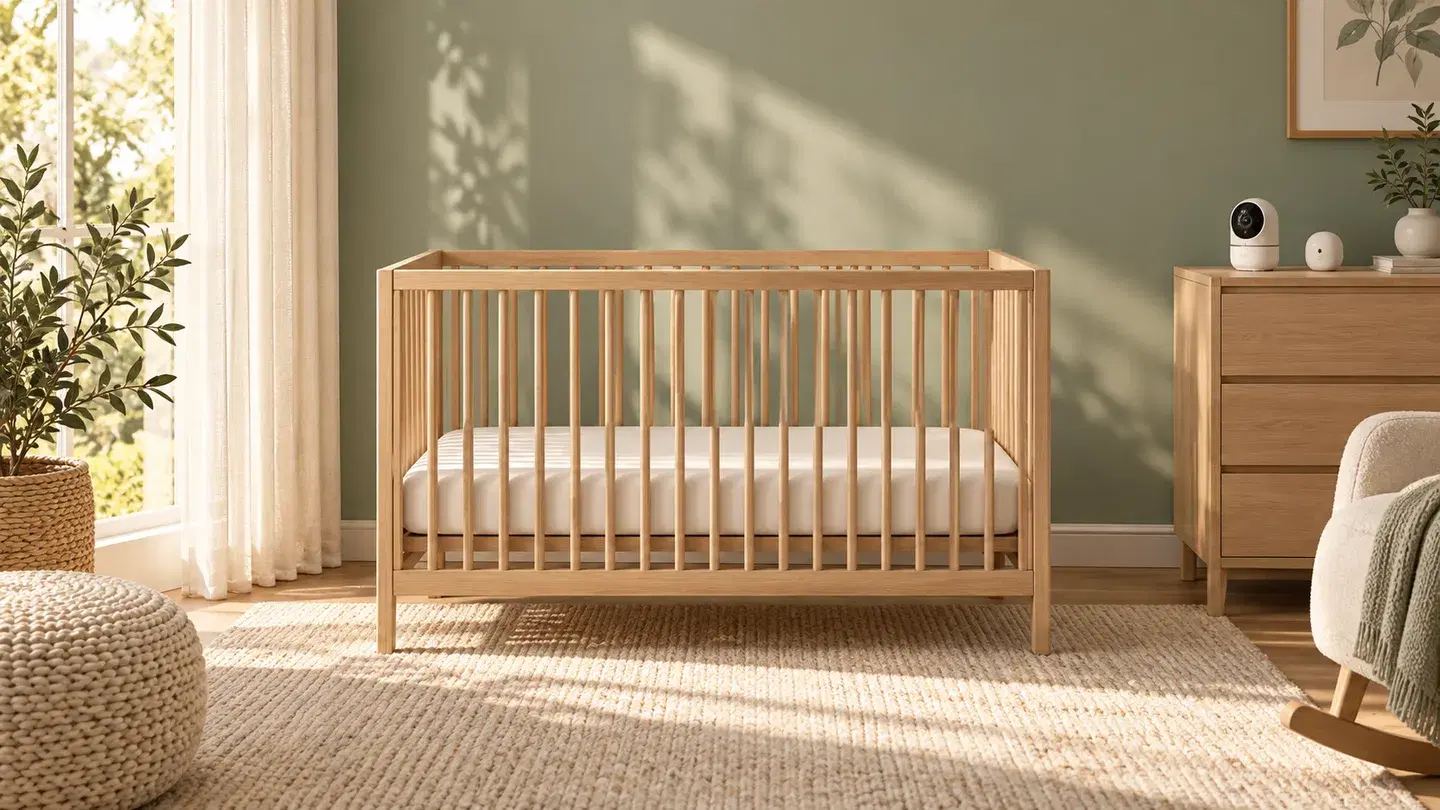
A smart nursery can make everyday parenting tasks easier while helping maintain a comfortable and safe sleep environment for your baby.
Instead of replacing traditional nursery essentials, smart technology simply adds convenience. Parents can monitor sleep, adjust lighting, track room conditions and even automate bedtime routines.
The goal is not to fill the room with gadgets, but to use a few thoughtful devices that genuinely make life easier.
The foundation of a smart nursery
Most smart nurseries are built around four core elements:
- video monitoring
- environment sensors
- lighting control
- sleep audio or white noise
Together these create a nursery that parents can monitor and adjust without disturbing a sleeping baby.
Smart baby monitors
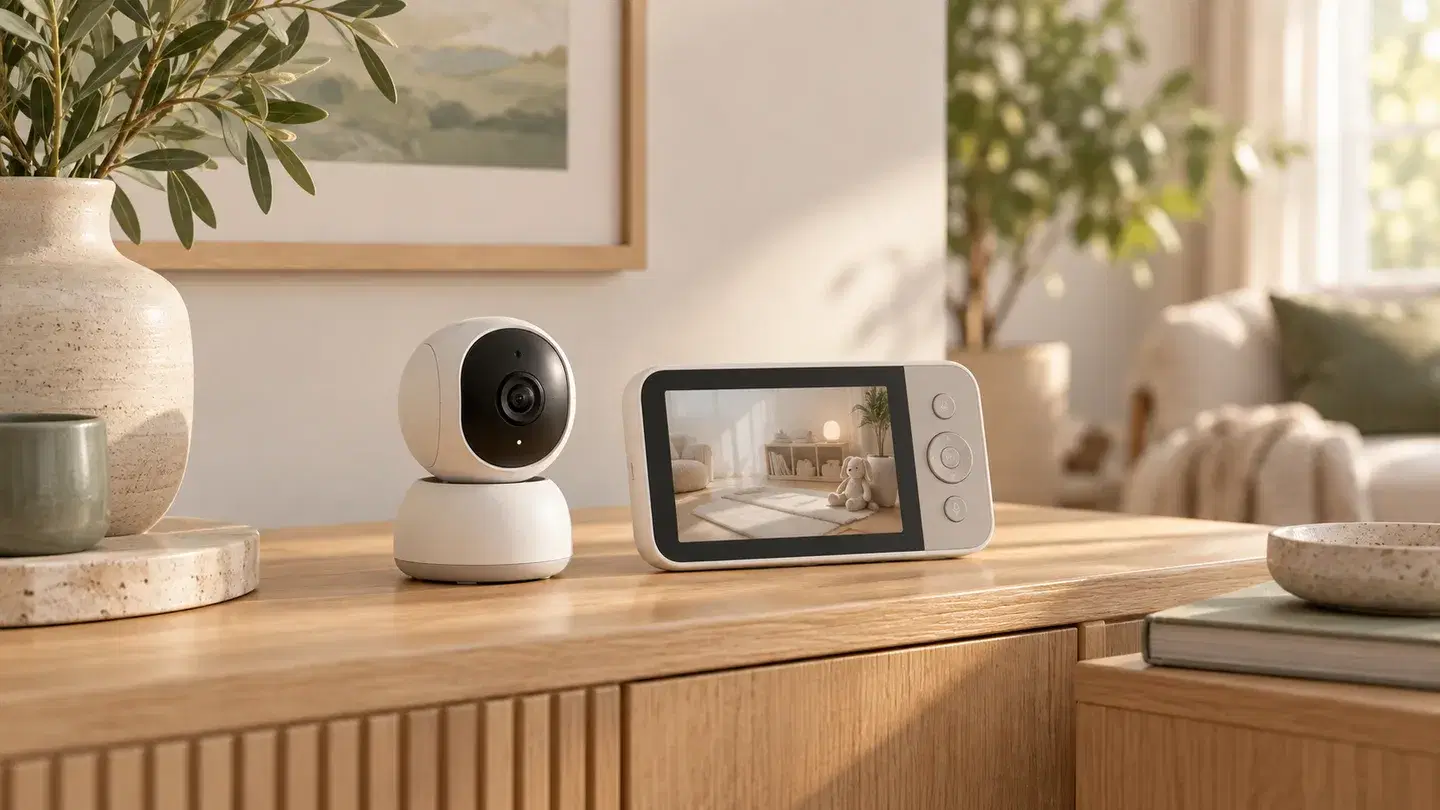
Video baby monitors have evolved significantly over the last few years.
Many models now include:
- breathing motion tracking
- sleep analytics
- cry detection
- smartphone notifications
- HD night vision cameras
These features allow parents to check on their baby without entering the room and potentially waking them.
Smart lighting for night feeds and bedtime routines
Lighting plays a major role in sleep routines.
Smart lights can:
- dim gradually during bedtime
- turn on softly for night feeds
- change colour temperature to reduce stimulation
- be controlled without entering the nursery
Warm lighting in the evening is generally preferred as it supports melatonin production.
Monitoring room temperature and humidity
Temperature changes can disrupt sleep.
Smart sensors allow parents to:
- monitor temperature remotely
- receive alerts if the room becomes too warm or too cold
- integrate with smart thermostats for automatic adjustment
Maintaining a stable sleep environment is one of the simplest ways to improve sleep quality.
Using voice assistants in the nursery
Voice assistants like Google Nest or Apple Home can be surprisingly helpful in a nursery.
Parents often use them to:
- start bedtime routines
- play white noise
- dim lights
- check room temperature
- control smart plugs
Simple voice commands can reduce the need to move around the room during night feeds.
Practical tips when building a smart nursery
Smart technology works best when it stays simple.
Consider these practical tips:
- avoid too many devices
- prioritise reliability over novelty
- keep Wi-Fi security strong
- place cameras safely out of reach
- maintain manual backups (like traditional thermometers)
Technology should assist parenting, not complicate it.
Bottom line
A smart nursery does not need to be complicated.
A simple setup with a reliable baby monitor, adjustable lighting, temperature sensors and a white noise device can significantly improve convenience for parents while helping maintain a calm sleep environment for babies.
Start small, choose reliable products, and add automation gradually as your family finds what works best.