
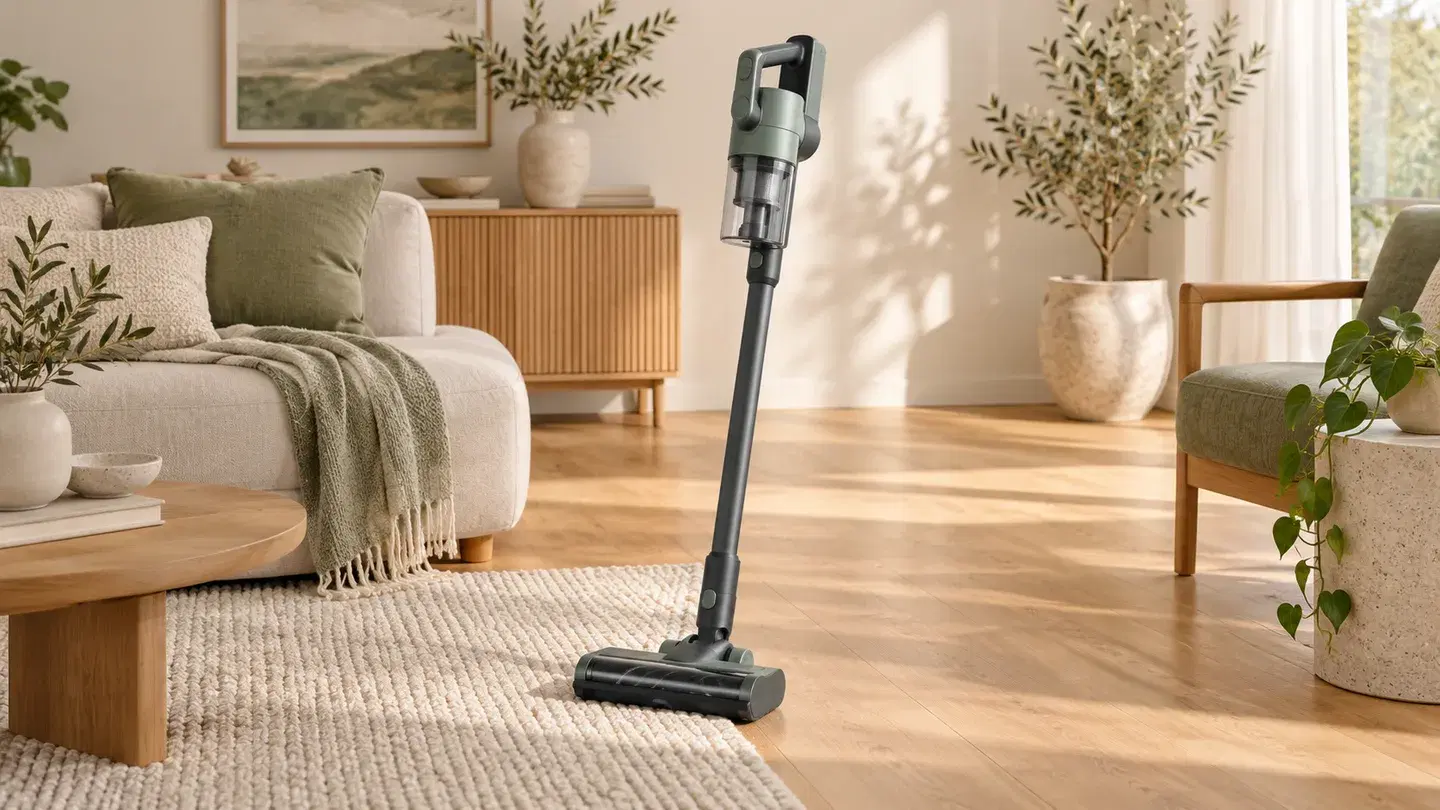
A cordless stick vacuum is easy to reach for after meals or for a quick pass through a hallway. Whether it can be your only vacuum depends on your floors, the size of your home and the time you can spend cleaning before recharging.
Start with your floors
Write down how much of your home is hard floor, carpet and rugs. A cleaning head that works well on tiles may perform differently on a thick rug. If you have pets, check how a model handles hair on the actual surfaces you own, not just whether the listing says “pet”.
CHOICE's stick vacuum buying guide explains the features it considers, while its corded versus stick guide helps with the first decision: quick-clean convenience or a machine for longer sessions. Their independent model tests are more useful than a single suction number on a product page.
Compare usable runtime
Battery claims may be measured on a low-power setting without the floor head you would normally use. Check what mode the advertised figure covers, how long charging takes, and whether a replacement battery is available. For a larger home, plan a normal cleaning route and consider whether you can finish it at the setting your floors need.
Handle the machine before buying
The listed weight is only part of the experience. Try the grip, trigger, steering and balance if a shop has a display unit. Lift it to the height of your stairs or shelves. Check whether you can remove the bin, clean the filter and untangle the brush without a complicated routine.
| Your situation | Prioritise checking | Possible downside |
|---|---|---|
| Mostly hard floors | Pickup of fine dust and larger crumbs | A specialised head may be less versatile on rugs |
| Carpets or pet hair | Independent carpet and hair test results | Higher power can reduce runtime |
| Small flat | Storage footprint and easy bin emptying | A compact bin may need frequent emptying |
| Larger house | Runtime in the mode you use and battery replacement options | A heavier model may be tiring to carry |
Include upkeep in the price
Find the price and availability of replacement filters, batteries and brush parts before deciding. Check the local warranty and how service works in Australia. A low purchase price is less attractive if a worn battery or missing filter makes the machine difficult to keep using.
For battery safety, use the charger supplied with the product or one recommended by its manufacturer. Stop using a battery that appears damaged or overheats, and follow the manufacturer's storage and charging instructions. The ACCC's lithium-ion battery guide provides broader safety advice.
We have not ranked individual vacuums in this guide. Check current Australian listings and independent tests for the exact model before buying.